Filling a yard is easy.
You can always add more — another garden bed, another feature, another layer of stone or structure to make the space feel “finished.” But after enough years working with the land, you begin to understand that beauty rarely comes from how much is added. It comes from what is allowed to remain untouched.
That understanding is slow-earned.
It comes from walking hundreds of properties across this Island in silence. From watching rain settle into the same low corners every winter. From seeing moss slowly reclaim stone. From noticing how a single windswept tree can hold more presence than an entire constructed garden around it.
Over time, you realize the land already carries a memory of itself.
Our work is not to erase that memory. It's to uncover it.
Half of what we do is craftsmanship.
The other half is restraint — resisting the urge to overbuild, overfill, and overcomplicate. Knowing when to stop before the landscape loses the quiet feeling that made it special in the first place.
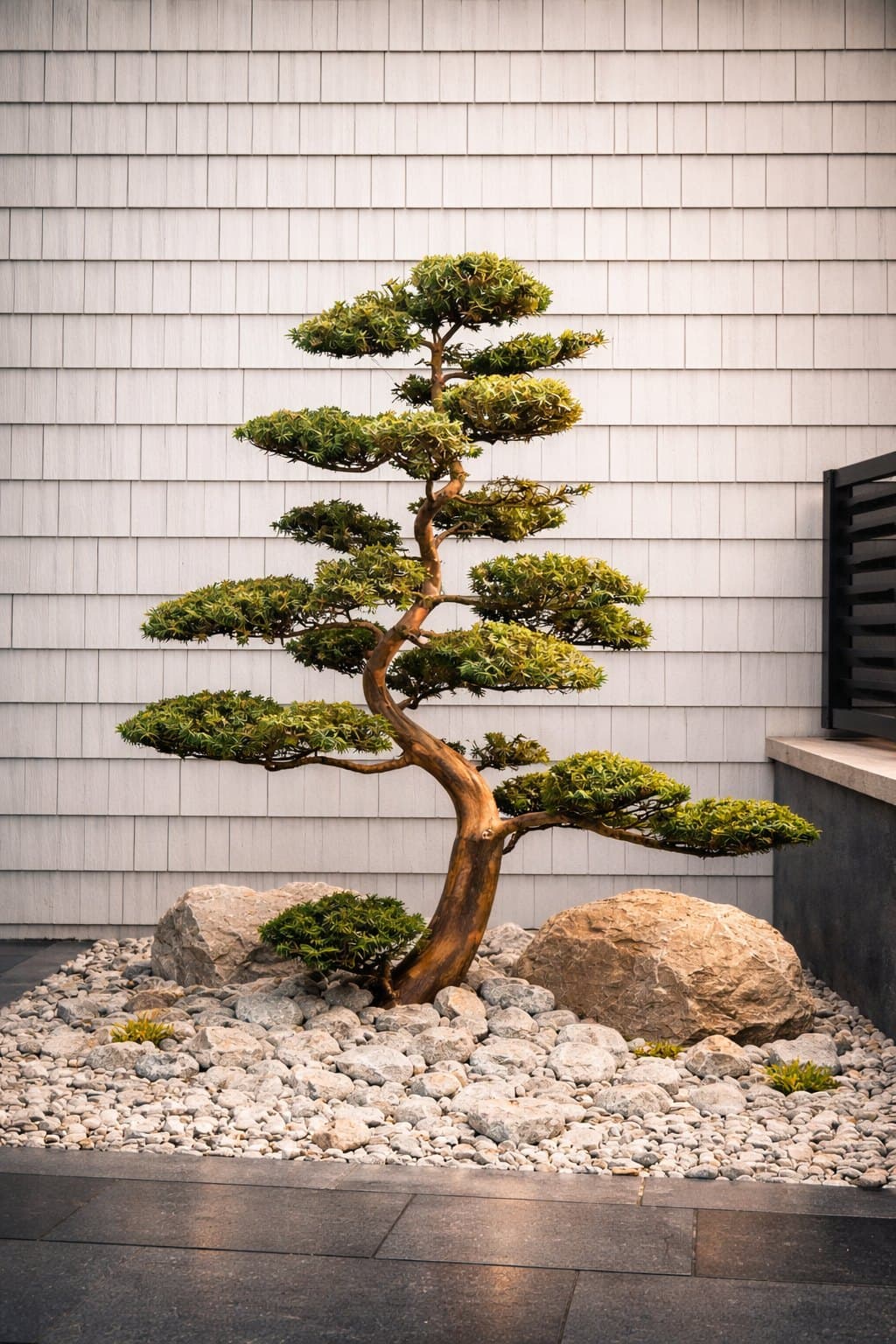
Sometimes clients ask why we leave an open space untouched. Why we preserve an uneven slope, or allow a cedar to stand alone without surrounding it in distractions. The answer is simple: not every part of a landscape is meant to be occupied. Some spaces are meant to create pause. To hold light. To let the garden breathe.
Those empty spaces are not missing something.
They are the thing.
Because the most meaningful landscapes do not demand attention.
They settle into your life slowly. You feel them in the stillness of an early morning, in the sound of gravel beneath your feet, in the way the garden softens the weight of a long day without needing to announce itself.
And years later, when the stone has weathered, the moss has thickened, and the trees have grown deeper into the land, it no longer feels like landscaping at all.
It simply feels like it belongs.